A problem with
far-reaching consequences for Bavaria
Many companies in the Free State of Bavaria are actively and intensively driving the process of decarbonisation and have already succeeded in avoiding CO₂. They have reached natural limits, however, because some processes that are essential for society inevitably produce CO₂. This happens especially in the cement and lime industries, in thermal waste treatment (waste incineration) as well as in parts of the chemical industry.
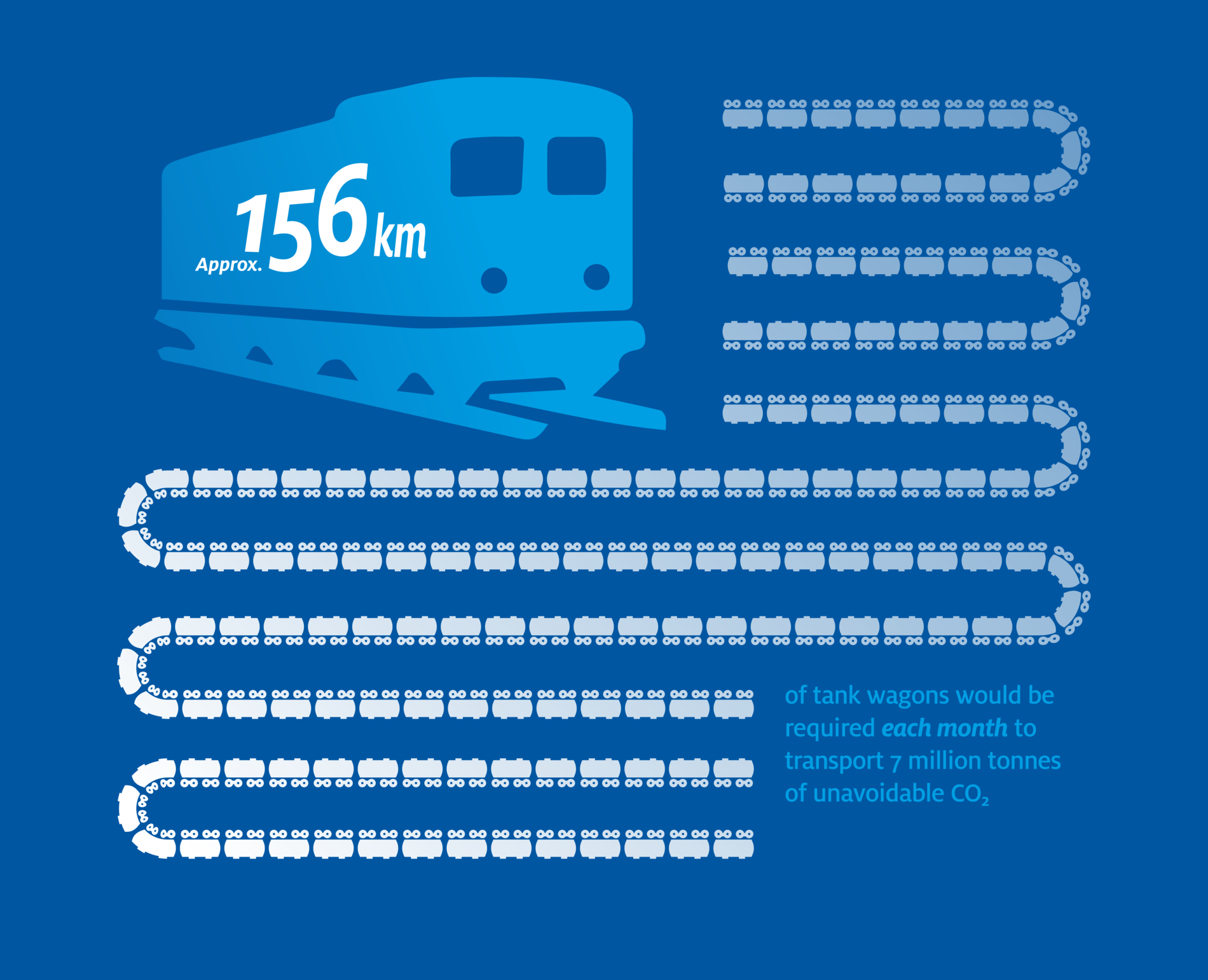
If no solution were to be found for transporting CO₂, these roughly 7 million tonnes of emissions would continue to be released into the atmosphere annually. This has direct consequences, raising the question for our domestic industry and municipal waste management if they should stay in the region and this in turn could lead to a loss of jobs. Simply relocating production to other countries provides no real solution. It would be merely an “export of emissions“ that does not help our global climate as emissions there are often produced under lower environmental standards.
Even if we increase the use of wood and other renewable raw materials, concrete – and therefore cement – will remain indispensable for the foundations of our society. For infrastructure such as bridges, tunnels, wind turbine foundations or the construction of hospitals and high-rise buildings, there is no large-scale substitution due to its stability, durability and fire-safety characteristics.
Without a transport solution, industry will relocate – but the CO₂ will remain
Many companies in Bavaria are driving decarbonisation efforts forward and have already achieved significant reductions in CO₂ emissions. However, there are natural limits to what can be avoided. In certain processes that are essential to modern society, CO₂ is generated unavoidably. These unavoidable emissions arise primarily in the cement and lime industries, from thermal waste treatment (waste-to-energy plants), and in parts of the chemical industry.
Without a solution to transport this CO₂ away, around 7 million tonnes per year would continue to be released into the atmosphere. This would have tangible consequences – not only for the climate, but also for Bavaria as a business and industrial location:
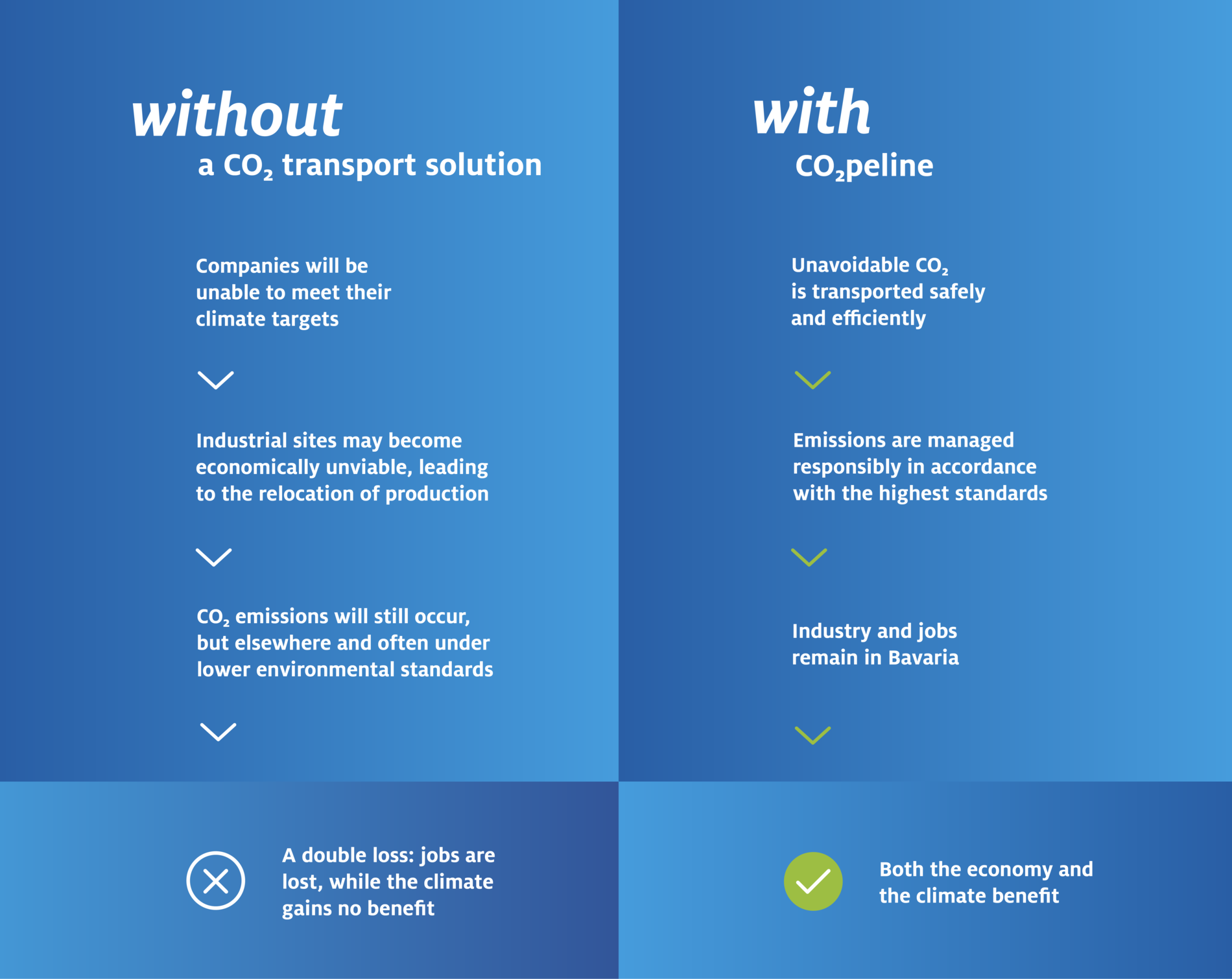
Relocating production abroad is not a solution – it merely exports the problem. Emissions would still occur, but in a different location and often under significantly lower environmental standards. The result: Bavaria loses jobs and economic value, while the climate gains no benefit.
The answer is not relocation but transportation. With a robust CO₂ infrastructure in place, production and jobs can remain in the region, while emissions are managed responsibly where they are generated.
What is dena?
dena (German Energy Agency) is Germany's centre of expertise for energy efficiency, renewable energy and intelligent energy systems. It is a federal, public-owned company and is considered a central, independent think tank and adviser for the federal government on its path to climate neutrality. Its studies, such as the flagship study “Towards Climate Neutrality“, significantly influence political decision-making in Germany.
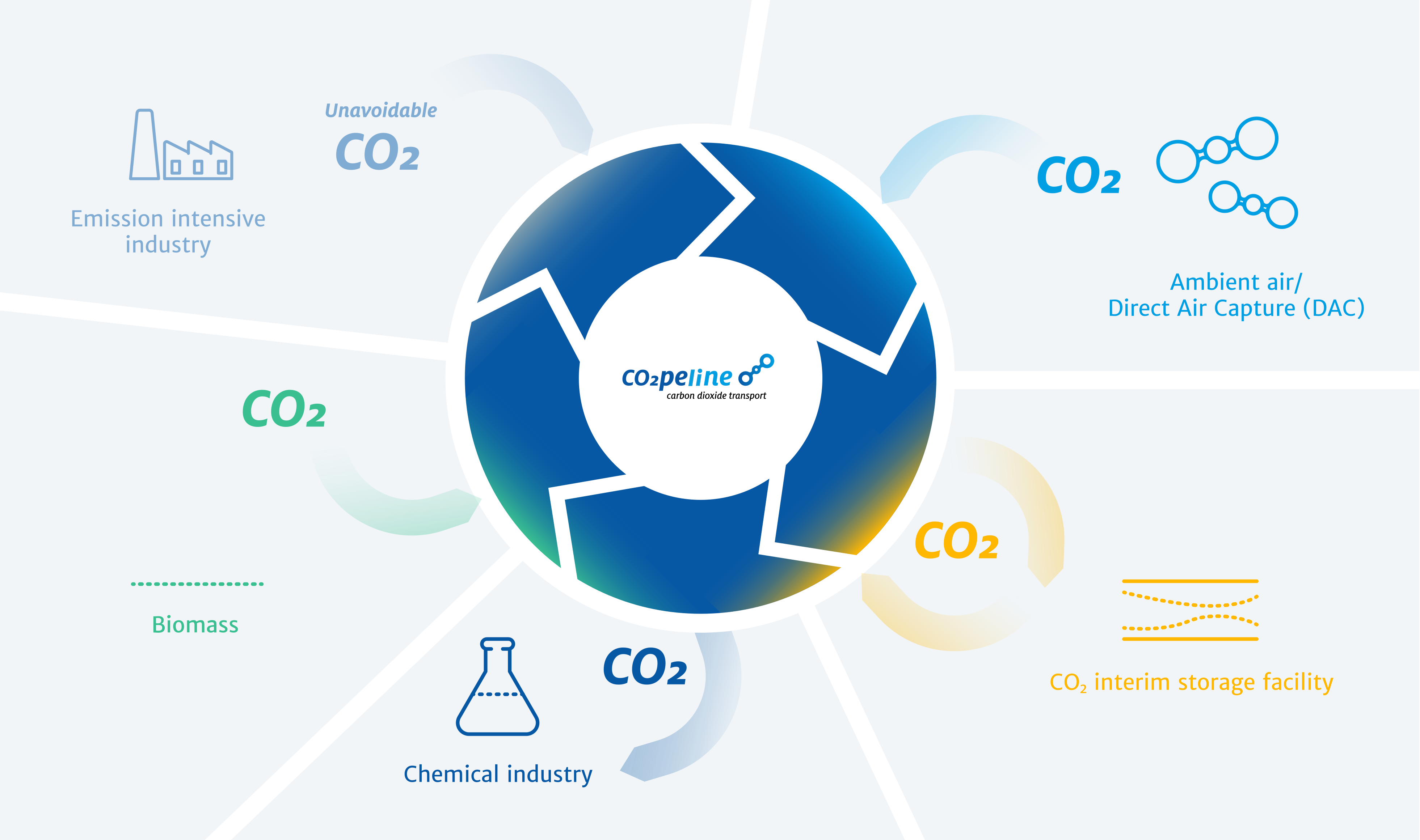
This is the circular economy pathway. CO₂ is transported as a valuable raw material to sites where it is used to produce climate neutral fuels (synfuels), plastics or building materials, replacing fossil raw materials such as crude oil and natural gas, thus remaining in circulation.
For CO₂ that can't (yet) be reused, permanent storage is the necessary option to achieve climate targets. It is for society and policymakers to decide if, where and how this storage can take place in deep geological rock formations. The state must create clear and safe boundary conditions and assume responsibility.
Our task as a neutral and dependable network operator is to provide the CO₂ infrastructure for both solutions. We safely transport the CO₂ to where it can remain in circulation or, when instructed by the state, to where it should be safely stored. We are a link within the system – not a storage operator.
A strong and innovative local economy is the basic requirement for being able to develop and finance costly climate-protection technologies in the first place. If general acceptance for climate protection is jeopardised because it is seen as a threat to jobs and prosperity, we will lose on all fronts. Solutions like co2peline therefore contribute to securing this acceptance.
Developing an infrastructure for hard-to-abate and unavoidable CO₂ emissions is therefore a significant component in meeting climate targets and securing the future viability of Bavaria as a healthy economic region. But how does transporting CO₂ in a pipeline work exactly and what high standards guarantee safety for people and the environment?